
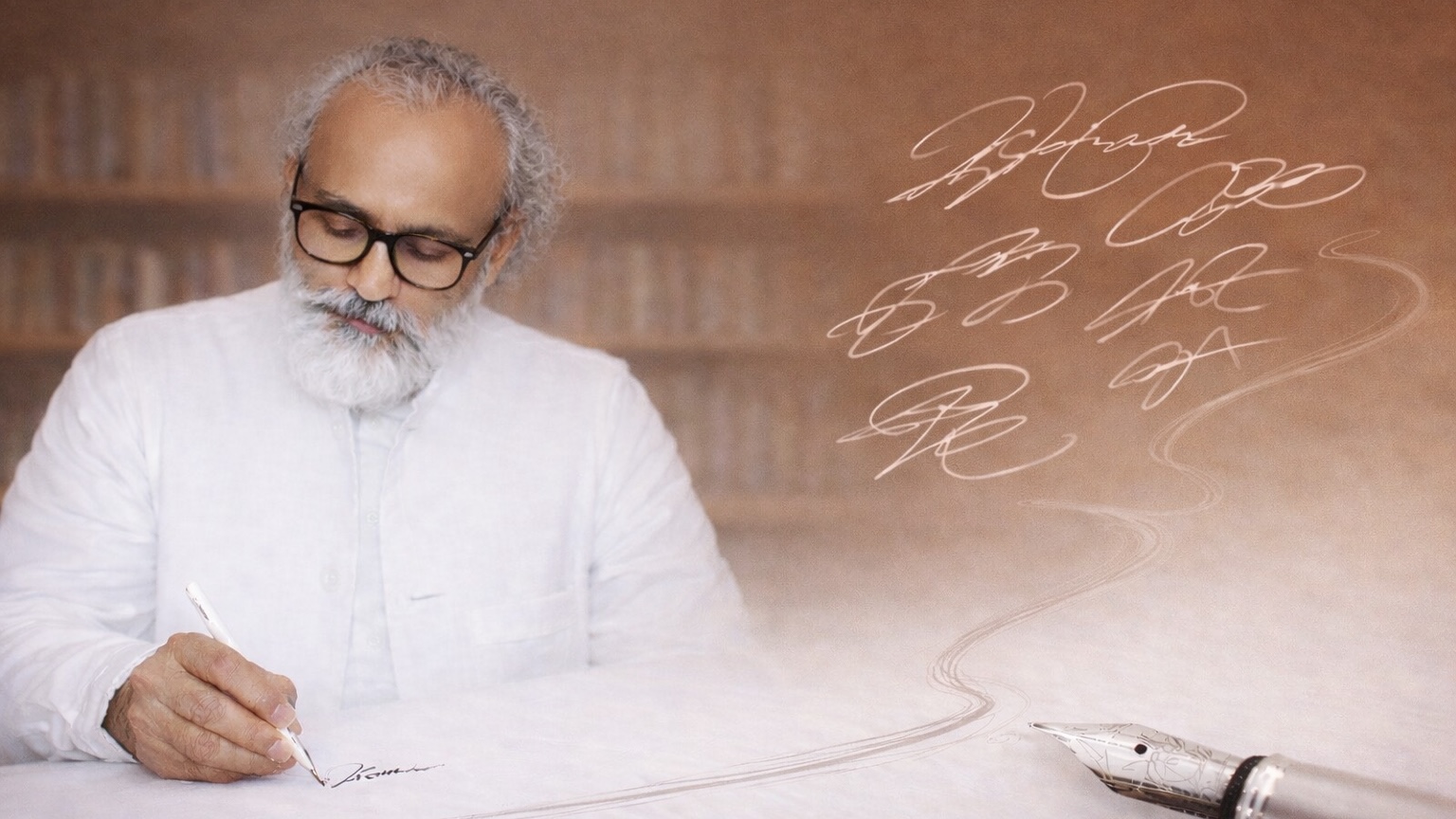
Small Signatures & Short Life
8 months ago By Yogi AnoopSmall Signatures and a Short Life — A Comfortable Superstition
From the very beginning of civilization, human desire has been obsessed with extending life. This desire has taken many forms—myths of immortality, elixirs of eternal youth, modern medicines, supplements, and now psychological shortcuts disguised as “insights.” Classical systems like Ayurveda speak of longevity through health and balance; yoga and meditation speak of extending life through disciplined living, breath, awareness, and harmony with nature.
What all these paths have in common is responsibility. They demand effort, understanding, restraint, and inner work.
But when responsibility feels burdensome, the human mind looks for refuge—and superstition becomes that refuge.
One such superstition claims that people who make small signatures live shorter lives. As if the span of life were determined not by biology, lifestyle, or consciousness, but by the length of ink dragged across paper. The moment such a claim is made, it becomes clear that mystery has replaced reason. Wherever mystery is used to avoid inquiry, discernment quietly exits.
If signatures truly determined lifespan, then nature itself would need to learn how to sign. Trees that live for centuries, turtles and whales that outlive generations of humans—what kind of signatures did they practice? And those who died young—were their signatures too small, too neat, too restrained? Nature has no pen, no paper, no handwriting—yet it determines lifespan with absolute precision.
Nature reads rhythm, not handwriting.
It reads breath, not signatures.
It reads cellular repair, nervous balance, food, sleep, stress, and mental clarity—not the flourish of a pen.
A more obvious contradiction appears immediately: what about people who cannot write at all? The illiterate, those who never learned to sign and only use a thumb impression—how is their lifespan calculated? Does their life count as zero? Or is it measured by the diameter of the thumb, the pressure of the print, or the spread of ink?
If a person who never signs anything still grows old, reaches eighty or ninety years, and dies naturally, then the entire theory collapses under its own weight.
This superstition survives not because it is true, but because it is convenient.
Changing one’s lifestyle is difficult. Watching one’s diet is demanding.
Regulating sleep, managing stress, understanding fear and anger, sitting with one’s own mind—these require sustained effort and honesty.
Compared to this, superstition offers a shortcut:
Small signature—danger. Make it bigger—problem solved.
No discipline is needed. No self-examination. Just stretch the pen a little farther and assume the future is secure.
If this idea were even remotely true, one might ask for its exact mathematics. How many millimeters of signature equal one extra year of life? People would practice diligently. Signatures would expand, checks would overflow, and banks would be forced to print longer checkbooks. Humanity has always been quick to adopt shortcuts—especially when lifelong responsibility can supposedly be replaced by a single stroke of ink.
At its core, this belief serves one function: it removes responsibility.
Illness appears—blame the signature. Fatigue arises—faulty handwriting.
A shortened life—wrong pen, wrong size.
In this way, food, sleep, emotions, habits, and mental imbalance are spared scrutiny. The blame is transferred neatly onto paper. This is self-deception in its most comfortable form.
And then there is a question rarely asked: what about the life of the one preaching this idea? Because advice is credible only when it reflects lived balance. Misleading others is one matter; misleading oneself is a far deeper darkness.
Quietly, reason whispers a different truth: Life is not measured by the size of a signature.
It is shaped by clarity of understanding, quality of conduct, depth of breath, stability of mind, and harmony with nature.
And an even deeper insight follows—the true value of life lies not in its length, but in its quality.
And that quality can never be produced by a large signature, nor destroyed by a small one. It can only emerge from a conscious way of living.
Recent Blog
Copyright - by Yogi Anoop Academy